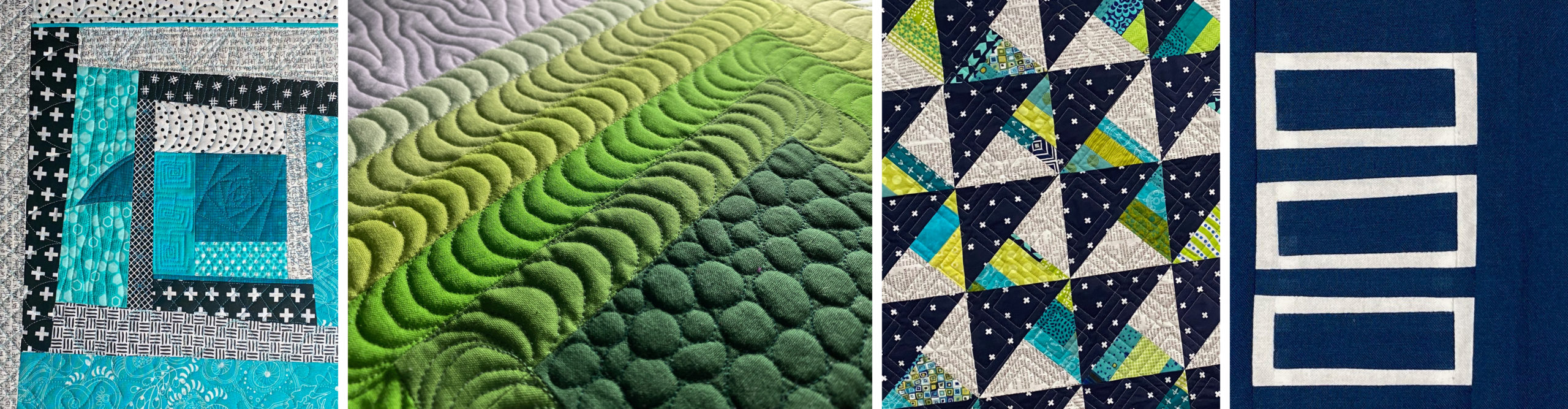
My April block for Charles was a labor of love. With permission from the photographer, Keith Dotson, Charles asked us to "recreate" our one-tenth of a photo. (We only got our photo and didn't get to see the other parts.) I'm excited to share my process with you here for my chunk of the photo.
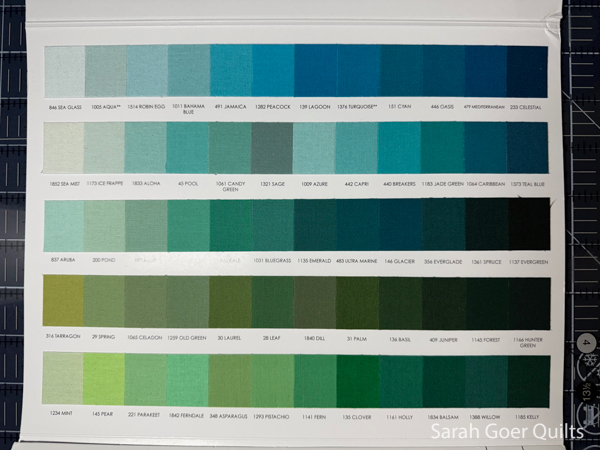
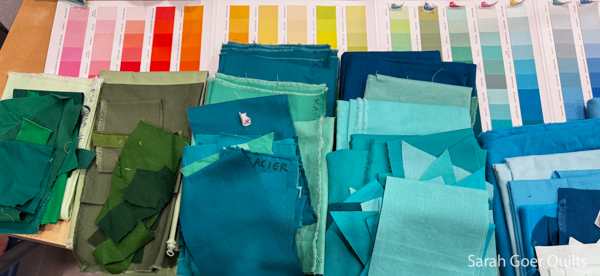
Charles asked us to work in an analogous fabric palette of solids with a wide variety of values including colors from 5 adjacent rows. I picked teals/turquoises and considered swinging into true blue or swinging into green. I started by pulling my fabric (yardage and scraps) for all 7 rows of the Kona card to really consider variety of color and value before I decided to go with the greens.
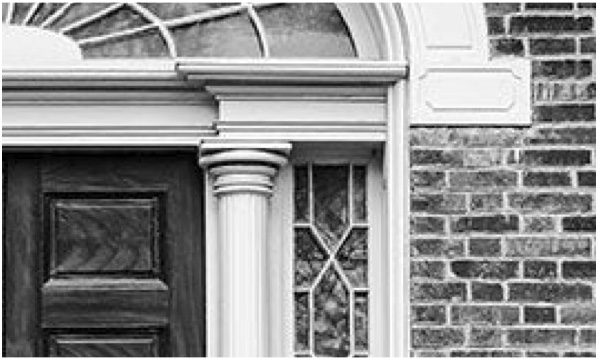
This is the portion of the photo I was assigned. This was ALL I saw to create my block.
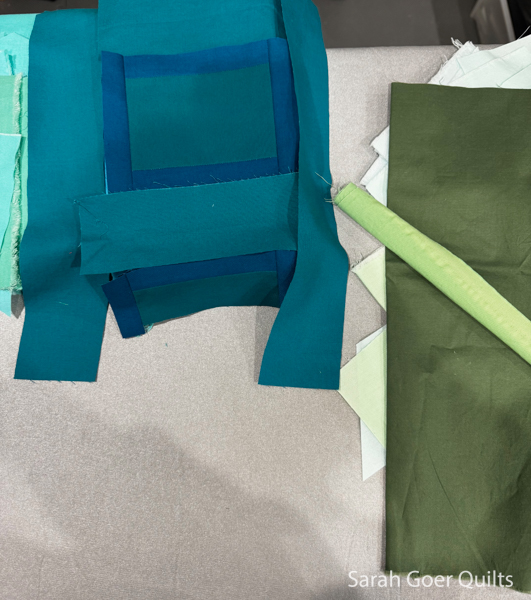
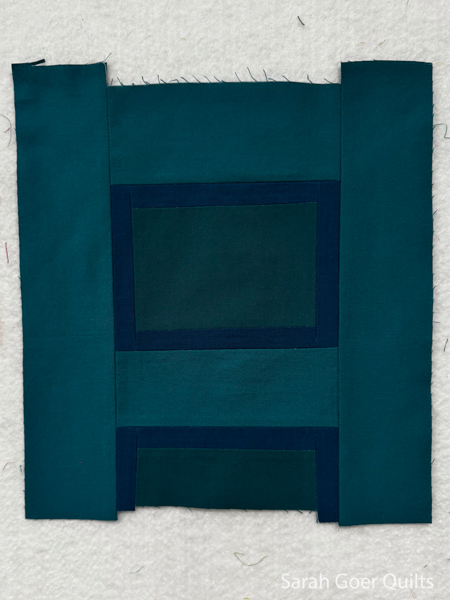
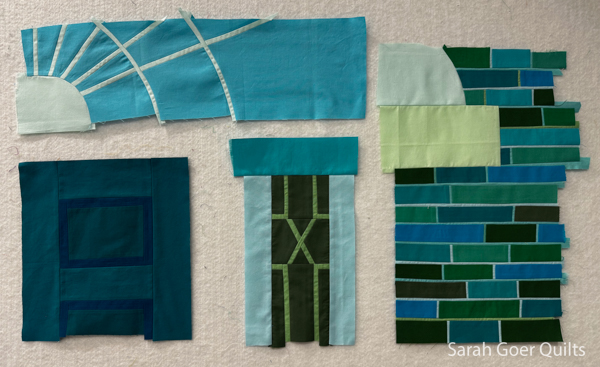
Every improv project for me is a matter of starting with components. This was no different even though it was guided by the photo of the door. The photo above left shows me auditioning fabric combinations for different sections. And the photos above right shows my finished door. I purposely built it a bit oversized and left the outer edges messy. I always wait to trim until I'm sewing onto something else.
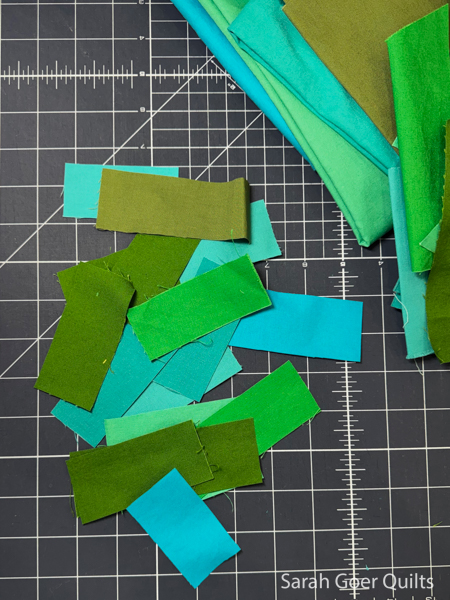
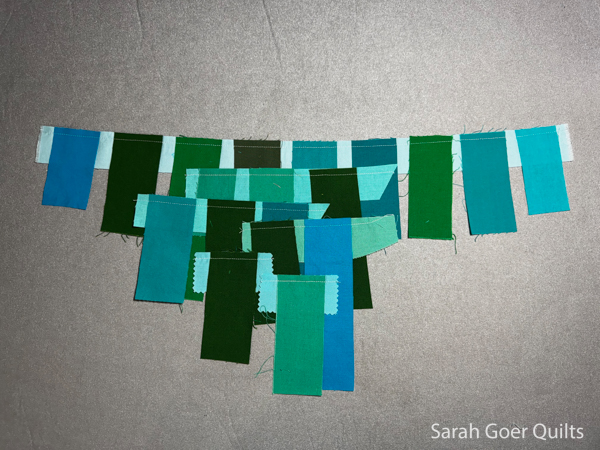
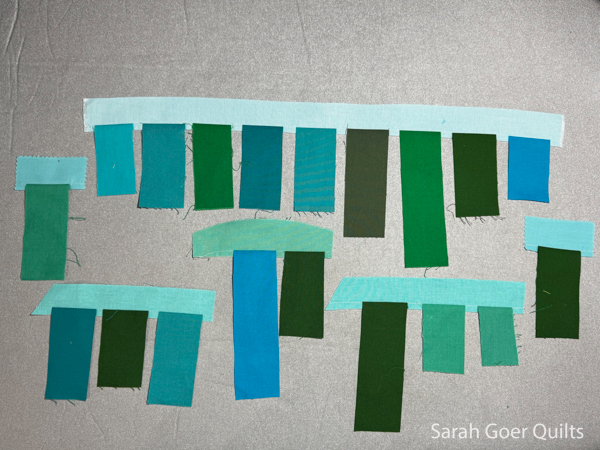
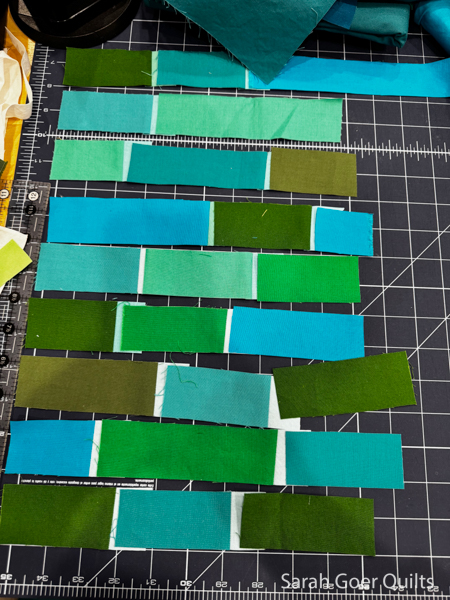
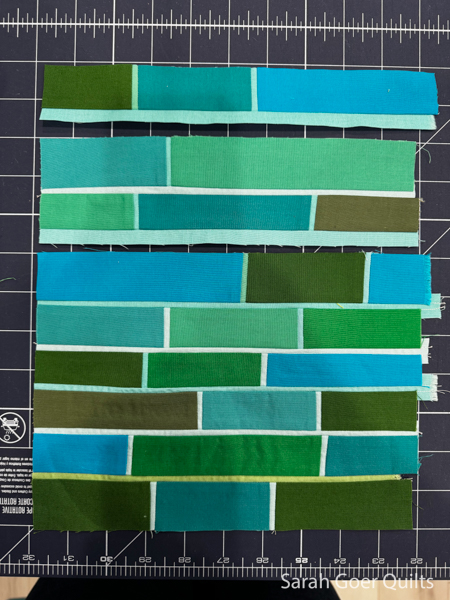
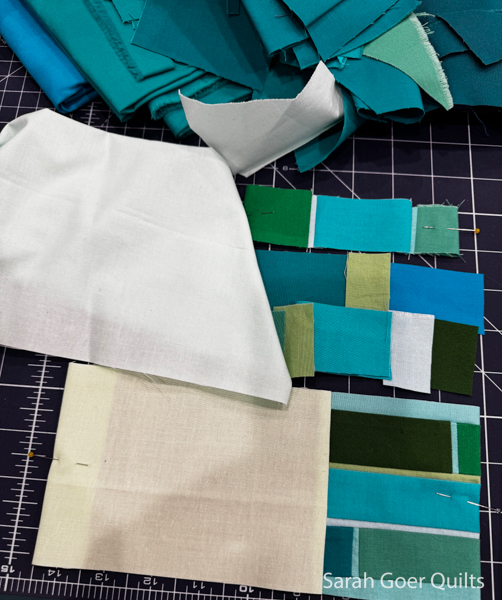
Then I got started on the bricks. I couldn't resist piecing the bricks AND the mortar, which meant I got to piece a bunch of skinny strips (1/8" finished width). I started by cutting out a bunch of bricks in a variety of medium to dark values in a variety of colors to make the wall scrappy. Then I sewed those onto the light/medium valued strips on the short sides so I could build the rows. From there I worked on arranging them into the finished rows, piecing together the pieces in each row, and then joining the rows with skinny strips pieced in between each row. I was purposely scrappy with the mortar fabrics as well. The last photo above shows me auditioning light fabrics to be the portions of the building that connect to that section of bricks.
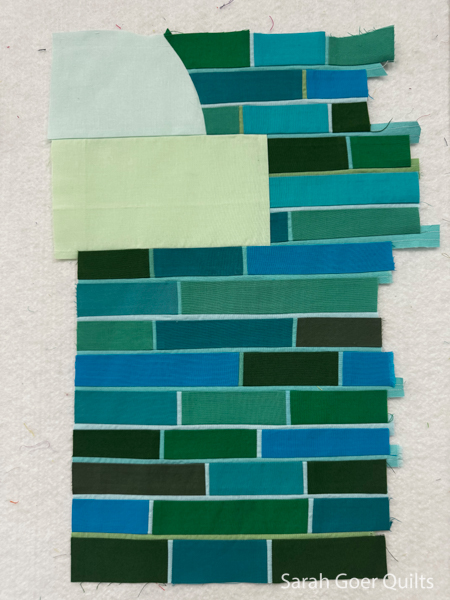
And here's the brick wall once I'd pieced it all together.
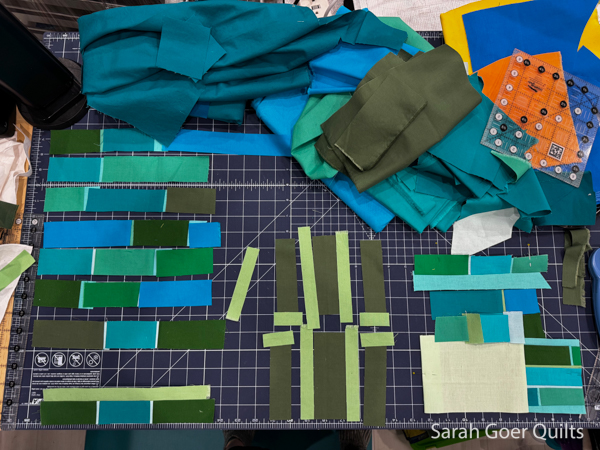
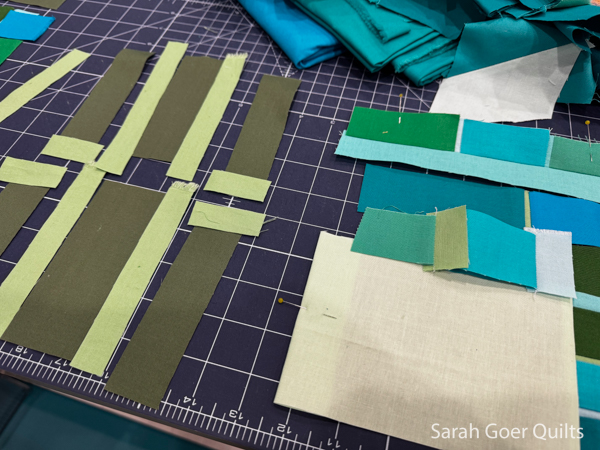
I work on a messy table (you can actually see fabrics from a section project I was working on concurrently) and piece multiple sections at the same time.
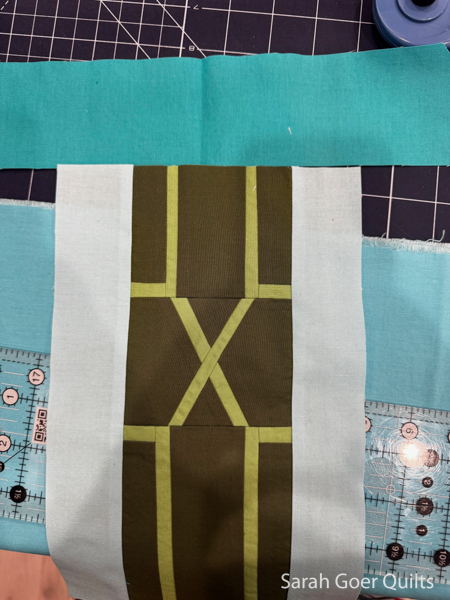
The finished side window, auditioning the top fabric.
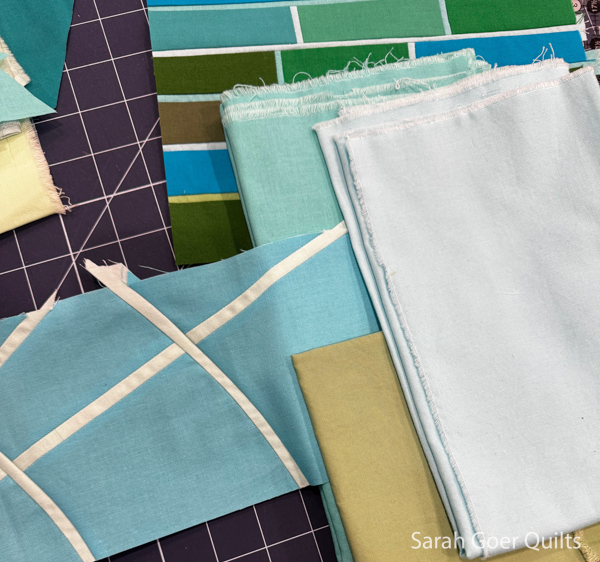
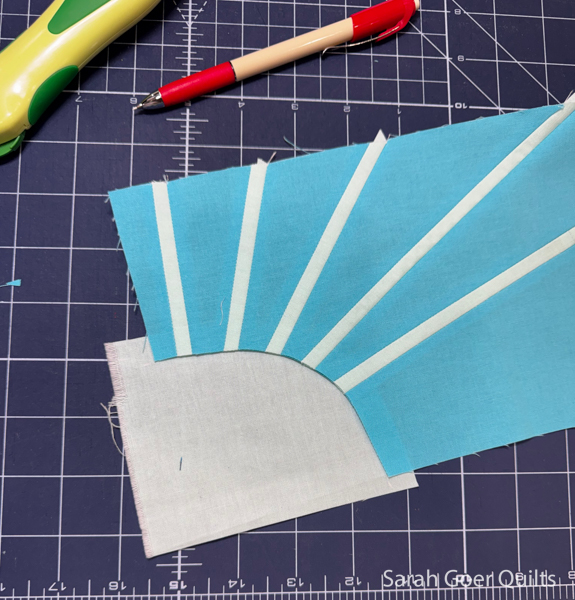
Above left: more auditioning of fabrics. Above right: I'd pieced the radiating lines of the upper window and needed to join it to the "quarter circle" portion of the window. You may be able to see the slight shadow of where the two sections overlap by about a half inch so that once joined with a 1/4" seam allowance they would lay flat.
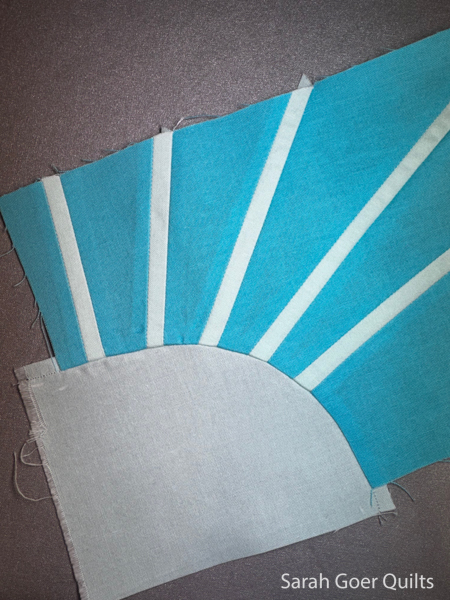
Once I pieced this seam, I was able to add the curved lines into the window (see below).
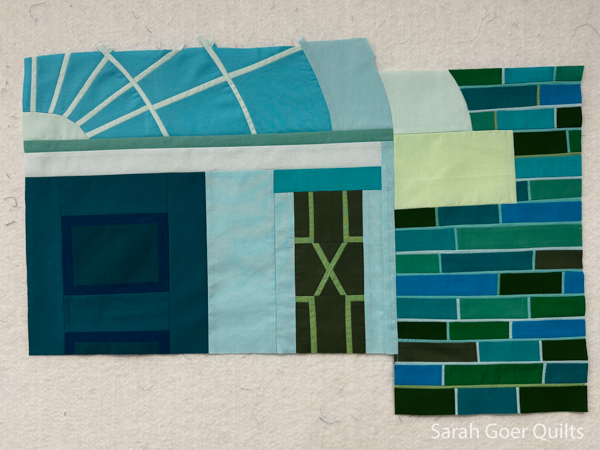
Above left: the finished main components of my section of the door photo. From here I worked to add in strips for the detail of the trip, paying attention to the overall size and scale of where things should roughly connect. Above right: finished before trimming the whole block. I had trimmed the bottom of the sections on the left as a means to get things lined up well. The process was improv, so we were never aiming for photo realism, but I still looked at the ratios of how things connected in the photo to make decisions about how I aligned my sections.
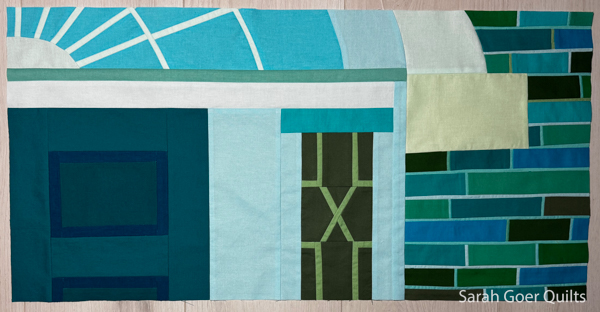
This is my completed 14" x 28" panel. I am so very proud of it!
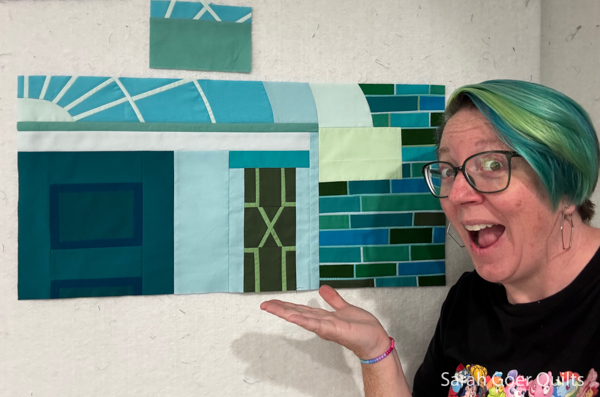
Tada! Can you tell I used my favorite colors? The piece above my block is my signature block for Charles (before I wrote on it). I used a section of what I trimmed off the top of the window.
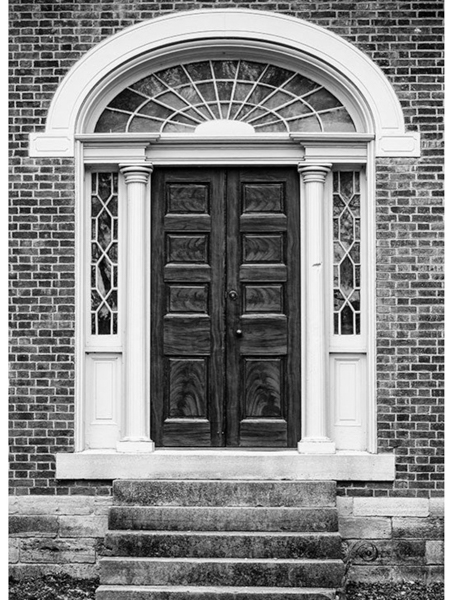
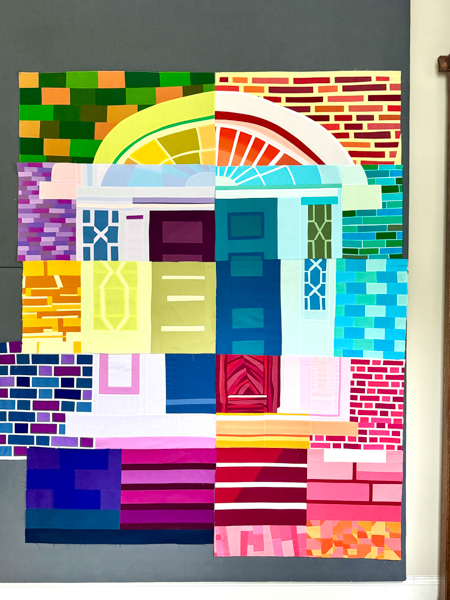
Charles recently shared all the blocks together on his design wall. (He showed great restraint by not opening any of the packages until they are ALL arrived!) Friends, I am SO excited about this quilt. What a great vision and I'm so proud of the work we all did on these blocks. He shared these two photos for me to share here with you... the full black and white photo of the door by Keith Dotson and all 10 blocks on the design wall.